
TECHNICAL INFORMATION
Mother Vegetable Confidence Differences from Conventional Silica and Manufacturing Method
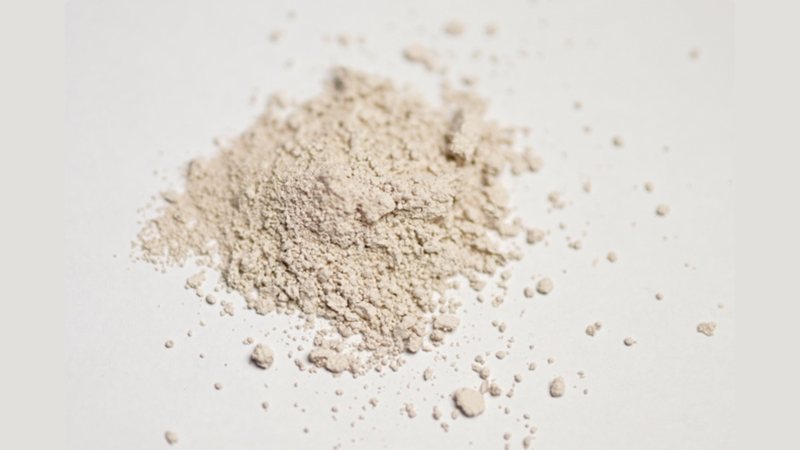
Mother Vegetable Confidence is a naturally derived silica raw material that makes use of the silica (SiO₂) skeleton formed by microalgae. The main differences from other silica raw materials, including synthetic silica, lie in how the silica is formed and how it is processed into a raw material.
Much synthetic silica is made from raw materials derived from stone, minerals, rice husks and similar sources, through high-temperature processes or reactions with sulfuric acid or similar substances. Mother Vegetable Confidence, by contrast, makes use of the ability of microalgae to take up silicon (Si) from water and form silica (SiO₂) through their life activity. One of its defining features is that, rather than chemically extracting silica with acids such as sulfuric or hydrochloric acid or refining it by high-temperature calcination, it is processed into a raw material mainly through steps such as centrifugation.
In addition, analytical testing by Japan Food Research Laboratories confirmed a silica content of 96.9%.
This page explains the characteristics of Mother Vegetable Confidence in terms of raw material, formation process, manufacturing method, quality and applications.
How Mother Vegetable Forms Silica
Mother Vegetable (Microalgae) Take Up Silicon from Water and Form a Silica Skeleton
Among the tens of thousands of microalgae species, those known as diatoms are characterized by forming shells and skeletons composed mainly of silica around their cells. Silicon is generally dissolved in natural waters in forms such as silicic acid, and diatoms take up this dissolved silicon and form silica inside their cells.
The silica formed becomes the material for the shells and skeletons that make up the cell.
This process is generally known as biosilicification.
Fine pores and regular structures can be seen in diatom silica skeletons, and their form varies by species.
Mother Vegetable focuses on diatoms that form silica skeletons, such as Skeletonema, Chaetoceros and Aulacoseira.
Relationship to Skeleton Formation in Living Organisms
Human bone, for example, gains its hardness and strength from calcium phosphate minerals (inorganic components). Diatoms, in turn, use silica to form their cell shells and skeletons. Although the biological mechanisms differ, both have in common that they use inorganic components as structural materials for the body.
Mother Vegetable Confidence thus makes use of the natural ability of microalgae to take up silicon from water and form silica, and is processed into a naturally derived, high-purity silica raw material without chemical treatments such as acid extraction with sulfuric or hydrochloric acid or refining by high-temperature calcination.
SILICA COMPARISON
How Mother Vegetable Confidence Differs from Conventional Silica
Silica (SiO₂) is classified into several types according to its raw material and manufacturing method.
Mother Vegetable Confidence is a raw material that uses the silica skeleton formed through the life activity of microalgae, which take up silicon from water.
By contrast, many methods for producing mineral-derived and rice husk-derived silica involve acid treatment with sulfuric or hydrochloric acid, or heat treatment, during refining and recovery of the raw material.
Below, the main differences are shown using, as the basis of comparison, examples of refining mineral-derived silica with acid treatment and calcination, and examples of recovering rice husk-derived silica with acid treatment and combustion.
| Item | Mother Vegetable Confidence | Mineral-derived silica | Rice husk-derived silica |
|---|---|---|---|
| Raw material | Microalgae (diatoms) | Minerals such as quartz | Rice husks |
| Sourcing | Indoor cultivation | Mining of minerals | Collection of rice husks |
| Silica formation / recovery | Diatoms take up silicon and form a silica skeleton | Refining of silica contained in minerals | Recovery of silica accumulated in rice husks |
| Use of acids such as sulfuric or hydrochloric acid | Not used | Used | Used |
| High-temperature processes | Refining by high-temperature calcination not performed | Involves calcination | Involves combustion and calcination |
| Refining / recovery method | Centrifugation, etc. | Acid treatment, calcination, etc. | Acid washing, combustion, etc. |
| Origin and characteristics of silica | Uses a silica skeleton formed by living organisms | Silica contained in minerals | Silica accumulated by plants |
For mineral-derived silica, refining methods involving acid treatment and calcination are used as the basis of comparison; for rice husk-derived silica, recovery methods involving acid treatment and combustion.
Note that manufacturing methods for synthetic amorphous silica include wet processes, in which a silicate is reacted with an acid, and thermal processes, in which silicon compounds are reacted in a high-temperature flame. These are distinct in manufacturing method from the refining examples for mineral-derived silica and the recovery examples for rice husk-derived silica above.
Manufacturing Characteristics of Mother Vegetable Confidence
Mother Vegetable Confidence is characterized by using the silica skeleton formed by microalgae and processing it into a raw material without chemical extraction with acids such as sulfuric or hydrochloric acid or refining by high-temperature calcination. Another characteristic is the use of a controlled indoor cultivation environment, without agricultural chemicals or chemical fertilizers.
Analytical testing by Japan Food Research Laboratories confirmed a silica content of 96.9%.
*The 96.9% figure is the result for the submitted sample in Certificate of Analysis No. 26017229001-0101, issued March 16, 2026.
How Mother Vegetable Confidence Silica Is Made
Mother Vegetable Confidence is processed into a raw material using silica formed by microalgae, without acid extraction with sulfuric or hydrochloric acid or refining by high-temperature calcination.
1. Controlled Indoor Cultivation
Mother Vegetable’s cultivation method uses an indoor environment in which conditions such as light, water and temperature can be controlled. The aim is to reduce dependence on the outdoor environment and stabilize cultivation conditions. It also helps reduce the risk of contamination by external dust, insects and other foreign matter.
2. Cultivation without Agricultural Chemicals or Chemical Fertilizers
Mother Vegetable does not use agricultural chemicals or chemical fertilizers during cultivation. To control the quality of the raw material, it is important to manage not only the cultivation equipment but also the water and culture materials used.
3. Formation of the Silica Skeleton
During cultivation, the microalgae take up dissolved silicon from the water and form a silica skeleton through their life activity.
A biogenic silica structure is formed at this stage.
4. Drying, Centrifugation and Other Steps
The harvested microalgae go through steps such as washing, drying, centrifugation and classification to separate the silica-rich fraction. This manufacturing method is characterized by not involving chemical extraction of silica with acids such as sulfuric or hydrochloric acid, or refining by high-temperature calcination.
5. Quality Verification
The collected silica powder undergoes third-party analytical testing, including component content and specification tests, to verify its quality.
BIOGENIC COMPONENTS
The Silica Still Carries the Traces of Living Microalgae.
Biogenic Components Contained in High-Purity Silica.
Through the centrifugation process, Mother Vegetable Confidence has silica (SiO₂) as its main component while containing small amounts of organic components derived from microalgae, such as dietary fiber, protein and fat.
This is because Mother Vegetable diatoms take up silicon from water and form a silica skeleton through their life activity, and also contain, within their cells, chloroplasts that carry out photosynthesis, as well as proteins and fats.
Conventional synthetic silica is made by chemically reacting raw materials derived from quartz sand or similar sources to form silica. Mother Vegetable Confidence, on the other hand, uses silica formed by microalgae and is processed into a raw material mainly through steps such as centrifugation, without chemical extraction with acids such as sulfuric or hydrochloric acid or high-temperature calcination. As a result, while its main component is high-purity silica, organic components derived from the source microalgae remain.
The presence of these organic components is one of the compositional characteristics showing that Mother Vegetable Confidence is a biologically derived material.
- Anhydrous silicic acid (SiO₂) 96.9–97.1%
- Protein Contains (2.4–2.6%)
- Dietary fiber Contains (0.3–0.5%)
- Fat Contains (0.1% or less)
- Moisture 0.1%
*Component values are based on the product’s ingredient labeling and the Certificate of Analysis.
Silica Purity and Analysis Results of Mother Vegetable Confidence
Third-Party Quality Analysis
Mother Vegetable Confidence has undergone analytical testing by Japan Food Research Laboratories. “Anhydrous silicic acid” in the table below refers to silicon dioxide (SiO₂), a compound of silicon and oxygen commonly known as silica.
The Certificate of Analysis dated March 16, 2026 confirmed an anhydrous silicic acid content of 96.9%, and test items such as heavy metals and arsenic were also confirmed to conform to the Japanese Standards of Quasi-Drug Ingredients.
Third-Party Analysis Results
| Item | Result |
|---|---|
| Sample name | Mother Vegetable Confidence |
| Target component | Anhydrous silicic acid |
| Anhydrous silicic acid content | 96.9% |
| Heavy metals | Conforms to standard |
| Arsenic | Conforms to standard |
| Fluorine | 20 ppm or less |
| Color and form | White powder |
| Odor | None |
| Testing organization | Japan Food Research Laboratories |
| Certificate No. | No. 26017229001-0101 |
| Date of issue | March 16, 2026 |
Conformity to the Japanese Standards of Quasi-Drug Ingredients
The analytical tests produced conforming results for test items based on the Japanese Standards of Quasi-Drug Ingredients.
Using Mother Vegetable Confidence on the Skin
Uses of Silica as a Cosmetic Ingredient
Silica is used as a cosmetic ingredient, mainly for purposes such as adjusting powder feel, adsorption, preventing caking and adjusting product texture. (On the other hand, silica tends to be relatively costly among cosmetic ingredients, and the amounts used tend to be limited.)
Mother Vegetable Confidence is likewise being developed for use as a cosmetic ingredient, including these applications, as well as a pharmaceutical ingredient.
Intended Product Applications
As a cosmetic and pharmaceutical ingredient, it is being developed for use in products such as the following.
- Skincare creams
- Body care products
- Powder cosmetics
- Lotions and mists
- Hair care products
- Wound cream (Class 3 OTC drug in Japan)
Suitability for each application varies depending on the formulation and method of use of the final product.
Frequently Asked Questions about Mother Vegetable Confidence
Q1. What is the difference between Mother Vegetable silica and ordinary silica?
The main differences between Mother Vegetable Confidence (silica derived from Mother Vegetable) and conventional silica are the origin of the raw material and how the silica is formed and manufactured. Mother Vegetable Confidence uses silica formed through the life activity of microalgae, which take up silicon from water.
Some conventional synthetic silica is produced through chemical reactions or high-temperature processes. Confidence is distinctive in that silica derived from microalgae is processed into a raw material mainly through steps such as centrifugation.
Q2. Is Mother Vegetable Confidence natural silica?
Yes. Mother Vegetable Confidence is naturally derived silica that makes use of the silica formed by microalgae.
Q3. What is Mother Vegetable silica made from?
Microalgae take up silicon from water and form a silica skeleton. Third-party analysis has confirmed a silica content of 96.9%.
Q4. Which microalgae form silica at Mother Vegetable?
Diatoms such as Skeletonema, Chaetoceros and Aulacoseira. These diatoms are organisms that use silicon in water to form silica shells and skeletons.
Q5. Is sulfuric acid or a similar substance used in the manufacture of Mother Vegetable Confidence?
No, it is not used. According to Mother Vegetable’s manufacturing description, Confidence is produced by a method that does not involve chemical extraction of silica with acids such as sulfuric or hydrochloric acid. It is processed into a raw material mainly through drying and centrifugation.
Q6. Does the manufacture of Mother Vegetable Confidence (silica) require high-temperature calcination?
No, high-temperature calcination is not performed.
Some silica manufacturing methods use high-temperature processes, but Mother Vegetable Confidence is not refined by high-temperature calcination, so that the silica skeleton built by living organisms remains intact.
Q7. What is the silica purity of Mother Vegetable Confidence?
An analytical test by Japan Food Research Laboratories dated March 16, 2026 confirmed a silica content of 96.9%.
Q8. Is Mother Vegetable Confidence amorphous silica?
Yes, Mother Vegetable Confidence is amorphous silica.
Q9. Can Mother Vegetable Confidence be used on the skin?
Yes, Mother Vegetable silica can be used on the skin as one of the ingredients used in cosmetics. However, safety and compatibility with the skin vary from person to person, so please check the formulation and conditions of use of the final product before use. Avoid use if it does not suit your skin.
Technical Documents and Raw Material Information
If you need specialized documents such as raw material information, please see our Resources for Medical and Research Institutions page.
Related Links
- Resources for Medical and Research Institutions https://www.mothervegetable.org/professional-en
References
1. Silica Formation by Diatoms
A review on diatom biosilicification and their adaptive ability to uptake other metals into their frustules for potential application in bone repair.
Journal of Materials Chemistry B, 2021.
https://doi.org/10.1039/D1TB00322D
2. Manufacturing Methods for Synthetic Silica
Synthetic Amorphous Silica and Silicate Industry Association.
Synthetic Amorphous Silica Manufacturing Processes.
https://www.sassiassociation.org/about-silica/sas-manufacturing
3. Acid Treatment and Calcination of Mineral-Derived Silica
Advanced Processing Techniques and Impurity Management for High-Purity Quartz in Diverse Industrial Applications.
Minerals, 2024.
https://www.mdpi.com/2075-163X/14/6/571
4. Acid Treatment and Combustion of Rice Husk-Derived Silica
Production of High Purity Amorphous Silica from Rice Husk.
Procedia Chemistry, 2016.
https://www.sciencedirect.com/science/article/pii/S1876619616001388
Preparation of Silica from Rice Husks.
Journal of the American Ceramic Society, 1996.
https://doi.org/10.1111/j.1151-2916.1996.tb08931.x
5. Silica as a Cosmetic Ingredient
Amended Safety Assessment of Synthetically Manufactured Amorphous Silica and Hydrated Silica as Used in Cosmetics.
International Journal of Toxicology, 2025.
https://pubmed.ncbi.nlm.nih.gov/40932354/
*This study is a safety assessment of synthetic amorphous silica and related materials and does not establish the safety of Confidence specifically.
6. Mother Vegetable Confidence Certificate of Analysis
Japan Food Research Laboratories
Certificate No. 26017229001-0101
Issued: March 16, 2026